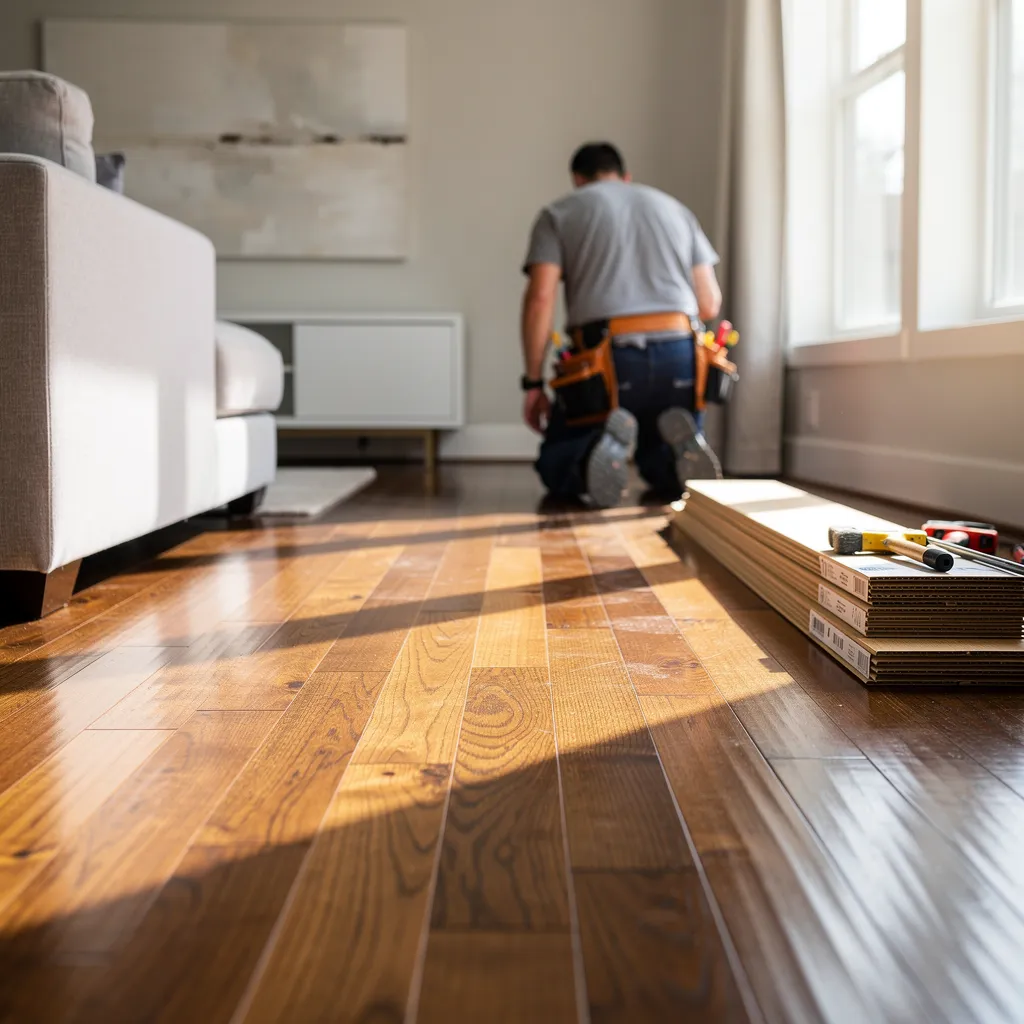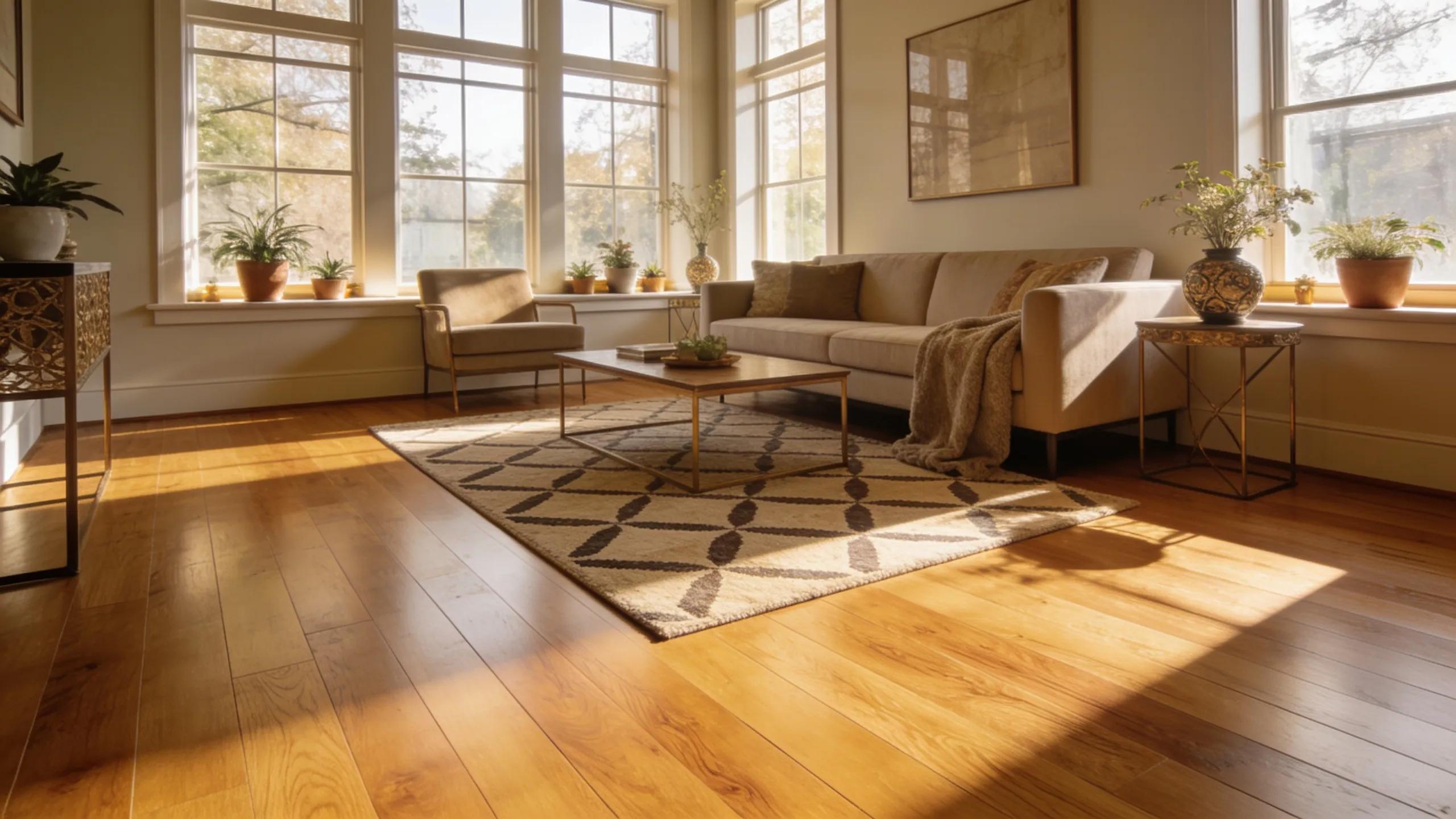
Affordable hardwood flooring options can transform any space without draining your budget. This complete guide to cheap and budget hardwood floors examines the most cost-effective flooring types, breaks down per-square-foot pricing, highlights installation and refinishing services, explores financing strategies, recommends options for different property uses, and provides maintenance and repair tips—all while showcasing BK Flooring Services Inc.’s expert, Marietta-based installation and refinishing solutions.
Key Takeaways
- Affordable hardwood flooring options offer real-wood appeal without high costs.
- Engineered hardwood provides budget-friendly solutions with moisture resistance and authentic wood grain.
- Solid hardwood remains cost-effective with lower grades like #2 Common Red Oak.
- Species like Red Oak, Pine, and Bamboo balance durability and budget considerations.
- Refinishing existing floors is a cost-effective alternative to full replacement.
- Professional installation ensures quality and long-term performance of hardwood floors.
- Financing options help spread the cost of hardwood flooring projects over time.
- Routine maintenance and timely repairs extend the life of budget hardwood floors.
What Are the Most Affordable Hardwood Flooring Types Available?
Affordable hardwood flooring covers a range of products designed to deliver real-wood appeal at lower prices. By comparing engineered construction, select solid grades, alternative species, and substitute materials, homeowners and property managers can choose options that balance cost, durability, and aesthetic value.
How Does Engineered Hardwood Offer Budget-Friendly Flooring Solutions?
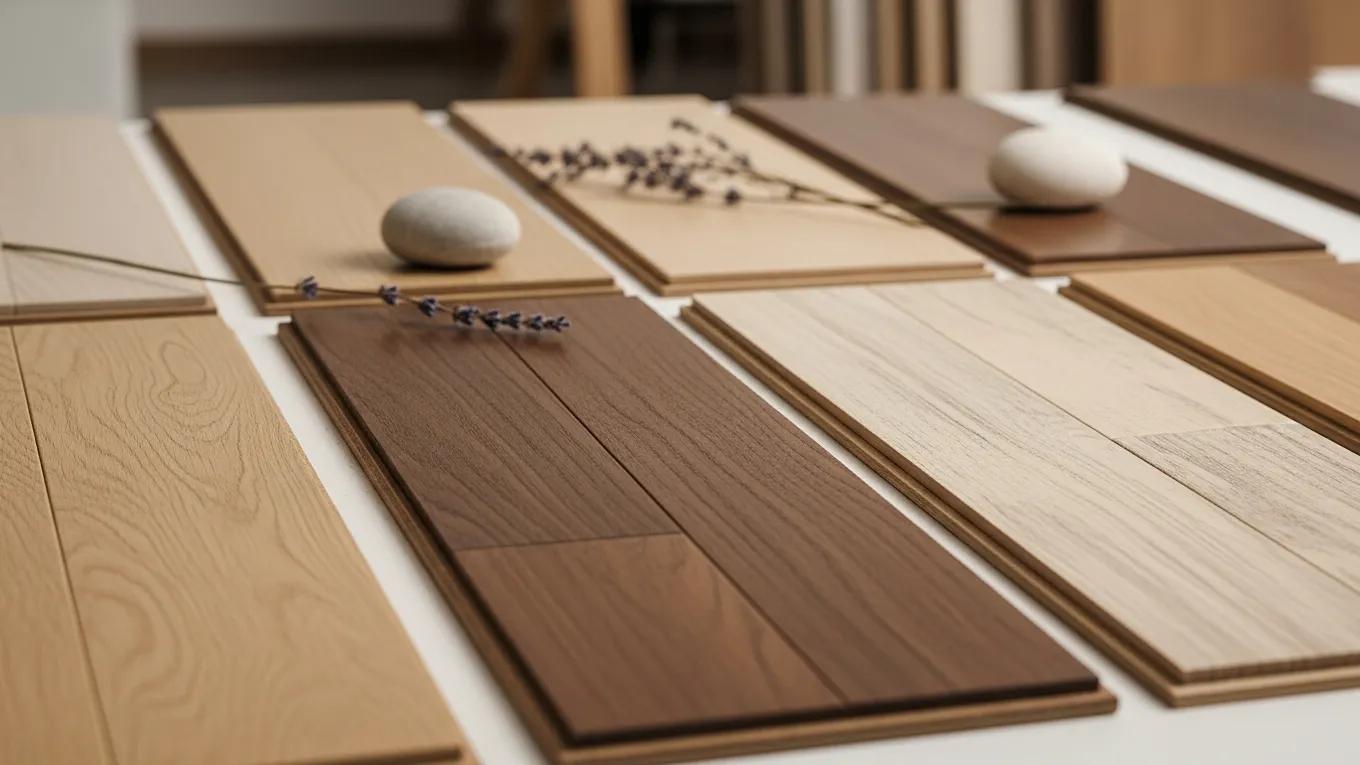
Engineered hardwood pairs a thin real-wood veneer with a plywood or HDF core, reducing material cost while maintaining authentic wood grain. This layered construction enhances dimensional stability and moisture resistance, delivering solid-wood appearance for $3–$10 per sq ft. Its affordability and versatility make it a top budget choice.
Engineered Hardwood Flooring Benefits
Engineered hardwood flooring offers a cost-effective alternative to solid hardwood, combining a real-wood veneer with a stable core. This construction enhances dimensional stability and moisture resistance, making it a practical choice for various environments while maintaining the aesthetic appeal of natural wood.
Is Solid Hardwood Still a Cost-Effective Option for Budget Flooring?
Yes, solid hardwood remains cost-effective when selecting lower grades and common species. Grades like #2 Common Red Oak offer distinct knots and color variation at $5–$9 per sq ft, while select grades fetch premium prices. Choosing economy grades allows solid planks to compete with engineered products on price without sacrificing longevity.
Which Hardwood Species Are Best for Budget Flooring?
Several species deliver strength and style at budget prices. Red Oak and White Oak are widely available and durable, Pine adds rustic charm at lower cost, Hickory offers hardness for high-traffic areas, and Bamboo provides a sustainable alternative. Each species balances Janka ratings and price per square foot.
Affordable Red Oak Grades Explained (#2 and #3 Common)
Red Oak #2 Common and #3 Common grades feature knots and mineral streaks that create unique character while reducing cost.
- #2 Common: $5–$9 per sq ft with moderate defects and consistent durability.
- #3 Common: $4–$7 per sq ft with larger knots and color variation.
These grades deliver real hardwood performance at a fraction of premium costs, making them ideal for large-scale installations.
Bamboo Flooring: A Sustainable and Affordable Alternative
Solid strand-woven bamboo costs $2.50–$5 per sq ft and offers hardness comparable to oak. Its rapid renewability and clean aesthetic appeal to eco-conscious buyers. Low material cost combined with simple click-lock installation yields one of the most affordable real-wood flooring solutions.
How Does Laminate Compare as a Cheap Hardwood Alternative?
Laminate flooring mimics real wood at $1–$5 per sq ft for materials and $3–$8 per sq ft installed. A high-density fiberboard core and photographic layer provide realistic grain patterns. While less valuable in resale, laminate excels in moisture resistance and scratch tolerance, making it a viable budget alternative before exploring real-wood refinishing.
With these product choices outlined, the next focus is on how much each option actually costs per square foot.
How Much Does Affordable Hardwood Flooring Cost Per Square Foot?
Understanding per-square-foot costs helps set realistic budgets and compare options side by side. Material prices, installation labor, refinishing savings, and subfloor preparation all influence the final p.
What Are Typical Material Costs for Engineered vs. Solid Hardwood?
Below is a comparison of average material costs and durability ratings for budget hardwood options:
| Flooring Type | Average Material Cost | Durability Rating (Janka) |
|---|---|---|
| Engineered Oak | $3–$7 per sq ft | 1290 |
| Engineered Bamboo | $2.50–$5 per sq ft | 1380 |
| Solid Red Oak #2 | $5–$9 per sq ft | 1290 |
| Solid Pine | $3–$6 per sq ft | 870 |
These ps illustrate how engineered veneers can undercut solid planks while offering comparable hardness and appearance, leading into installation expenses.
How Do Installation and Labor Costs Affect Your Hardwood Flooring Budget?
Installation labor typically ranges from $3 to $6 per sq ft depending on complexity, finish, and subfloor condition. Professional installation ensures precise fitting, secure fastening, and factory-warranty compliance—key for long-term performance.
Labor Cost Ranges in Marietta, GA for Hardwood Installation
| Service Component | Rate per Sq Ft | Area Served |
|---|---|---|
| Engineered Floor Installation | $3–$5 | Marietta, Cobb County |
| Solid Hardwood Installation | $4–$6 | Marietta, Cobb County |
| Subfloor Leveling & Prep | $1–$2 | Marietta, Cobb County |
Investing in skilled labor reduces errors, callbacks, and premature wear. Next, refinishing existing floors can offer significant savings compared to full replacement.
What Are the Cost Benefits of Refinishing Existing Hardwood Floors?
Refinishing restores worn floors for $3.50–$6 per sq ft—often less than half the price of new materials and installation. This process renews surface finish, corrects minor damage, and extends lifespan by decades. Homeowners save on demolition, disposal, and new material costs.
Cost-Effectiveness of Refinishing Hardwood Floors
Refinishing existing hardwood floors is a financially savvy approach, often costing less than half the price of new materials and installation. This process restores the floor’s appearance, corrects minor damage, and extends its lifespan, providing significant savings for homeowners.
Brown, A., “The Economics of Hardwood Floor Refinishing” (2023)
This citation reinforces the article’s point about the cost benefits of refinishing hardwood floors.
How Does Subfloor Preparation Impact Overall Installation Expenses?
Subfloor preparation, including leveling, moisture barriers, and joist reinforcement, can add $1–$3 per sq ft but prevents squeaks, warping, and premature finish failure. Proper subfloor work ensures that budget flooring options perform reliably over time.
Having reviewed cost components, the next section explores the most budget-friendly installation and refinishing services.
What Are the Best Budget Hardwood Flooring Installation and Refinishing Services?
Securing professional flooring services enhances value, avoids costly mistakes, and aligns with warranty requirements. BK Flooring Services Inc. offers tailored, budget-focused packages for new installation and refinishing in Marietta, GA.
Why Choose Professional Hardwood Floor Installation in Marietta, GA?
Professional installers bring over 20 years of local experience in subfloor inspection, moisture mitigation, and precise plank alignment. Their expertise reduces waste, ensures manufacturer warranties, and delivers a flawless finish that supports long-term home value.
How Does Professional Hardwood Floor Refinishing Save Money Long-Term?
Expert sanding and finishing eliminate deep wear without replacing planks, cutting material costs by up to 60 percent. A fresh finish also protects against future damage, reducing the frequency of repairs and preserving home resale value.
Can DIY Hardwood Installation or Refinishing Reduce Costs?
DIY projects can save on labor but carry risks of uneven sanding, visible gaps, and finish failures that require professional correction.
Key Risks and Savings of DIY Hardwood Projects
- Risk of improper subfloor prep leading to warping and squeaking.
- Potential finish irregularities from inconsistent sanding grit.
- Savings of $2–$4 per sq ft on labor if executed perfectly.
While DIY suits skilled homeowners on small areas, professional service delivers reliable results for entire home installations.
With installation and refinishing solutions covered, the next step is exploring financing options for budget hardwood projects.
How Can You Finance Your Affordable Hardwood Flooring Project?
Financing hardwood floors allows budget-minded buyers to spread costs over time without delaying improvements. Multiple options accommodate different credit profiles and cash-flow needs.
What Financing Options Are Available for Hardwood Flooring?
Homeowners can choose retailer financing plans, personal installment loans, or home equity lines of credit (HELOCs). Retail plans often offer deferred interest but require on-time payments. Personal loans provide fixed rates and terms, while HELOCs leverage property equity at competitive rates.
How Do Interest Rates and Payment Plans Affect Flooring Budgets?
Lower interest rates reduce overall project costs, while flexible term lengths adjust monthly payments. A five-year personal loan at 6 percent APR adds about $0.02 per dollar borrowed each month, influencing total budget planning.
Armed with financing insights, the guide now turns to selecting flooring by property type and use.
Which Affordable Hardwood Flooring Options Are Best for Specific Property Types?
Different properties demand varying levels of durability, appearance, and maintenance. Matching flooring choice to use case ensures cost-effective performance and tenant satisfaction.
What Hardwood Floors Are Ideal for Rental Properties on a Budget?
For rental units, engineered red oak or strand-woven bamboo provide resilience against moisture and heavy foot traffic. Their scratch-resistant finishes and warranty terms minimize turnover downtime and repair costs.
How to Choose Budget Hardwood Flooring for Commercial Spaces?
Commercial settings benefit from thicker wear layers on engineered floors and dense species like hickory or stained pine. Low-VOC factory finishes reduce maintenance frequency and support health-and-safety compliance.
Having selected the right product for each property type, ongoing care and repair extend budget flooring value.
How Do You Maintain and Repair Budget Hardwood Floors Cost-Effectively?
Routine maintenance and timely repairs preserve floor beauty and performance without large expenditures. Simple care routines prevent damage, while targeted fixes address wear.
What Are the Best Cost-Effective Hardwood Floor Maintenance Tips?
- Sweep or vacuum weekly to remove grit that scratches finish.
- Use manufacturer-approved cleaner and microfiber mop for gentle maintenance.
- Place protective pads under furniture legs to prevent dents.
These practices maintain finish integrity and delay costly repairs or refinishing projects.
How Much Do Affordable Hardwood Floor Repairs Typically Cost?
Minor scratch and dent repairs range from $1 to $3 per sq ft for spot sanding and touch-up. Board replacements cost $5–$10 per sq ft installed. Addressing damage early minimizes area affected and reduces total repair expense.
After understanding upkeep strategies, the final section compares advantages and trade-offs of budget hardwood options.
What Are the Pros and Cons of Cheap Hardwood Flooring Options?
Affordable hardwood choices offer real-wood aesthetics and value gains at lower up-front costs, but each option carries trade-offs in durability, refinishing potential, and resale impact.
What Are the Durability and Longevity Differences Between Engineered and Solid Hardwood?
Engineered hardwood resists moisture and temperature swings due to its plywood core but has thinner wear layers that may refinish only once or twice. Solid hardwood delivers deeper sanding potential and longer lifespan but requires stable humidity control and often costs more up front.
How Does Affordable Hardwood Flooring Impact Home Value and ROI?
Budget hardwood floors still add 3–5 percent to home value, with ROI averaging 70–80 percent. Even lower-grade species and engineered options contribute to curb appeal and resale, making them sound investments compared to carpet or vinyl alternatives.
Affordable hardwood floors deliver real-wood beauty, lasting performance, and strong resale impact without breaking the bank. By selecting the right product, understanding costs, using professional installation or refinishing services, and maintaining floors properly, homeowners and property managers can enjoy high value and low lifetime expense. BK Flooring Services Inc. stands ready with free quotes and guaranteed workmanship to make your budget flooring project a lasting success.